
As a supplier of Sanitization Cabinets, I've had the privilege of witnessing firsthand the transformative impact these units can have in maintaining a clean and safe environment. However, like any piece of equipment, sanitization cabinets come with their own set of limitations. Understanding these limitations is crucial for customers to make informed decisions and use the cabinets effectively.
1. Limited Sanitization Scope
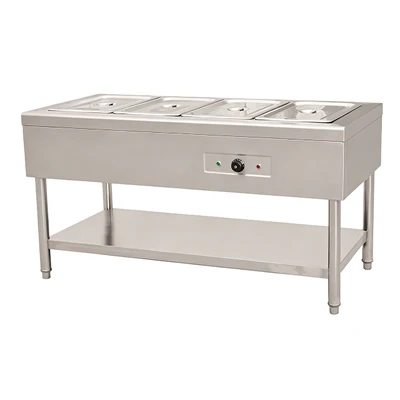
One of the primary limitations of a sanitization cabinet is its restricted scope of sanitization. Most sanitization cabinets are designed to sanitize small to medium - sized items. For instance, they are ideal for sanitizing utensils, small electronic devices, and personal items. But when it comes to larger items such as Cafeteria Steam Table, these cabinets are simply not suitable. The physical dimensions of the cabinet limit the size of the items that can be accommodated. Even if the items can be disassembled, the process of disassembling and reassembling can be time - consuming and may not be practical in a busy commercial setting.
Moreover, the sanitization method used in these cabinets may not be effective for all types of contaminants. Some cabinets use UV - C light for sanitization. While UV - C light is effective against many bacteria, viruses, and fungi, it has limitations. It requires direct line - of - sight to the surface of the item being sanitized. Items with complex shapes or those that are stacked inside the cabinet may have areas that are not exposed to the UV - C light, leaving them potentially unsanitized.
2. Sanitization Time
Another significant limitation is the time required for effective sanitization. Different sanitization methods have different time requirements. For example, if a cabinet uses heat for sanitization, it may take a relatively long time to reach the required temperature and then maintain it for a sufficient period to ensure proper sanitization. This can be a problem in a high - turnover environment, such as a cafeteria, where there is a constant need to sanitize a large number of items quickly.
Even with faster - acting sanitization methods like UV - C light, the time can still be a factor. To ensure thorough sanitization, items often need to be exposed to the UV - C light for a specific duration. If the operator is in a hurry and does not allow the full sanitization time, the items may not be properly sanitized, which can pose a risk to health and safety.
3. Maintenance and Cost
Sanitization cabinets require regular maintenance to function effectively. This includes cleaning the interior of the cabinet, replacing UV - C bulbs (if applicable), and checking the functionality of sensors and other components. Maintenance can be time - consuming and may require specialized knowledge or tools. If the maintenance is not carried out properly, the performance of the sanitization cabinet can decline, and it may not sanitize items as effectively as it should.
In addition to maintenance time, there are also cost implications. The initial purchase price of a high - quality sanitization cabinet can be relatively high. On top of that, there are ongoing costs such as electricity, replacement parts, and maintenance services. For small businesses or those on a tight budget, the cost of owning and operating a sanitization cabinet can be a significant barrier.
4. Dependency on Power Source
Sanitization cabinets are typically dependent on a power source to operate. This can be a limitation in areas with unreliable power supply or in situations where there is no access to electricity. For example, in outdoor events or in some remote locations, it may be difficult to find a suitable power source for the sanitization cabinet. Without a reliable power supply, the cabinet cannot function, which means that items cannot be sanitized.
5. Lack of Flexibility in Sanitization Levels
Most sanitization cabinets are designed to provide a standard level of sanitization. They are set to operate at a specific temperature, UV - C intensity, or use a particular chemical concentration (if applicable). However, different items may require different levels of sanitization. For example, medical equipment may need a higher level of sanitization compared to regular kitchen utensils. In such cases, a standard - setting sanitization cabinet may not be able to meet the specific requirements.
6. Compatibility with Different Materials
Sanitization methods used in cabinets may not be compatible with all types of materials. For example, some heat - based sanitization methods may damage heat - sensitive materials such as certain plastics or rubber. UV - C light can also cause discoloration or degradation of some materials over time. This means that not all items can be safely sanitized in a sanitization cabinet, and users need to be careful about the types of materials they place inside.
7. Limited Capacity for High - Volume Sanitization
In commercial settings, such as large cafeterias or hospitals, there is often a need to sanitize a large volume of items on a regular basis. While some larger - sized sanitization cabinets are available, they still have limitations in terms of capacity. For instance, if a cafeteria has a high number of Set Of 4 Dining Table Chairs that need to be sanitized after each use, a single sanitization cabinet may not be able to handle the volume. This can lead to delays in sanitization and may affect the overall efficiency of the operation.


Conclusion and Call to Action
Despite these limitations, sanitization cabinets still play a vital role in maintaining a clean and safe environment. At Sanitization Cabinet, we are committed to providing high - quality sanitization solutions. We understand the challenges our customers face and are constantly working on improving our products to overcome these limitations.
If you are in the market for a sanitization cabinet or have any questions about how to best use these cabinets in your specific setting, we encourage you to reach out to us. We can provide you with detailed information, product recommendations, and help you find the most suitable solution for your needs. Whether you are looking to sanitize small items in a home kitchen or large volumes of equipment in a commercial cafeteria, we are here to assist you.
Contact us today to start a conversation about your sanitization requirements and explore how our products can fit into your operations.
References
- "Principles of Sanitation in Food Processing", Food and Agriculture Organization of the United Nations
- "UV - C Disinfection Technology: A Review", Journal of Environmental Health
- "Commercial Kitchen Equipment Maintenance Guide", National Restaurant Association