
Yo, folks! I'm here as a supplier of Insulated Food Delivery Carts, and today I wanna break down how these nifty things work. You know, in the food delivery game, keeping the grub at the right temperature is super crucial. Whether it's a piping - hot pizza or a cold, refreshing salad, an insulated food delivery cart can be a real game - changer.
Let's start with the basics of insulation. The whole concept behind an Insulated Food Delivery Cart is to reduce the transfer of heat between the inside and the outside of the cart. You see, heat moves in three main ways: conduction, convection, and radiation.
Conduction is when heat travels through a solid material. In an insulated cart, we use materials with low thermal conductivity. For example, many carts are made with double - walled construction. The space between the two walls is often filled with insulating materials like foam. Foam is great because it has a bunch of air pockets. Air is a poor conductor of heat, so these pockets slow down the heat transfer. When you put hot food in the cart, the heat won't just zip through the walls and out into the cold air.
Convection is the movement of heat through a fluid (like air or water). Inside the cart, we want to minimize the movement of air that could carry heat away from the food. That's why many insulated food delivery carts have a tight - fitting door and a well - sealed design. There are also often internal baffles or dividers. These structures disrupt the flow of air inside the cart, preventing the warm air from rising and escaping and the cold air from rushing in.
Radiation is the transfer of heat in the form of electromagnetic waves. To counteract this, the interior of the insulated food delivery cart is sometimes coated with reflective materials. These materials reflect the heat waves back into the cart, keeping the food nice and toasty.
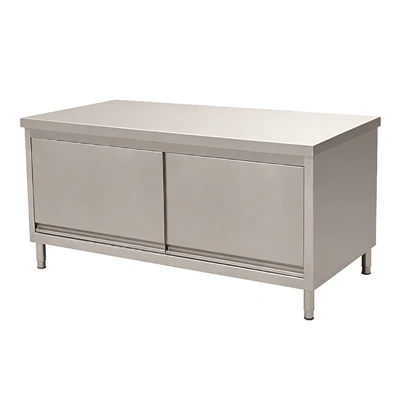
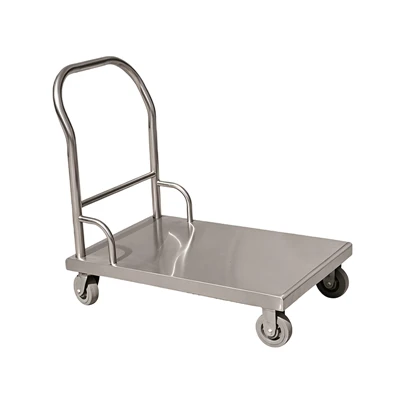
Now, let's talk about the components that make up an insulated food delivery cart. First off, the outer shell is usually made of something durable, like stainless steel. Stainless steel is a popular choice because it's strong, resistant to corrosion, and easy to clean. You don't want a cart that's gonna rust or fall apart after a few uses. And if you're interested in other stainless - steel kitchen equipment, check out our Commercial Stainless Steel Trolley and Commercial Stainless Tables.
The insulation layer, as I mentioned earlier, is key. It can be different types of foam, like polyurethane foam. This type of foam has excellent insulating properties and can withstand some wear and tear. The inner lining of the cart also plays a role. It might be made of a material that's easy to wipe clean, like a smooth plastic. This is important because food spills are bound to happen, and you need to be able to keep the inside of the cart hygienic.
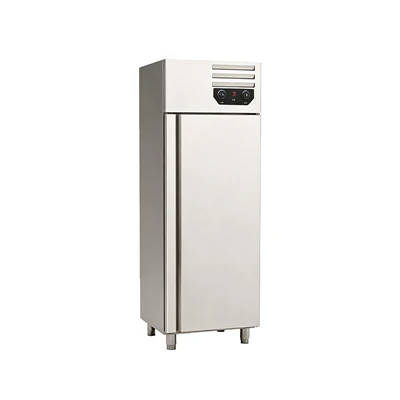
Some insulated food delivery carts come with additional features to help maintain the temperature. For example, there might be a built - in heating or cooling system. In the case of a heating system, it could be electric or use a fuel source like propane. These systems can kick in to keep the food at a consistent temperature, especially if the delivery is gonna take a while.
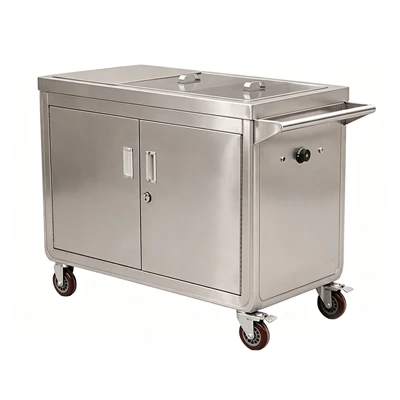
When it comes to the design of the cart, it's not just about insulation. Mobility is also a big factor. Most carts have wheels, and these wheels are usually sturdy and easy to maneuver. You want to be able to roll the cart around easily, whether it's in a busy kitchen or on the sidewalk during a delivery. The handle of the cart should be comfortable to hold, and it might be adjustable to fit different users.
Let's not forget about the storage capacity. Different carts have different sizes and configurations. Some might have multiple shelves or compartments, so you can organize different types of food. This is handy for restaurants that are delivering a variety of items. You can keep the pizzas on one shelf and the desserts on another, for example.
The locking mechanism on the cart is another important aspect. A good lock will keep the door shut tightly, preventing any heat from escaping. And in some cases, it can also provide security, especially if you're leaving the cart outside for a short time.
Now, I know what you're thinking. "This all sounds great, but how does it actually perform in real - world situations?" Well, I've heard from many of our customers who use these carts every day. For a pizza place, they've noticed a big improvement in the quality of the delivered pizzas. The crust stays crispy, and the cheese stays melted. Without an insulated cart, the pizza would be lukewarm and soggy by the time it reaches the customer.
A salad delivery service also benefits a lot. Their salads stay fresh and crisp because the cart keeps them cool. No more wilting greens or warm dressings.

If you're in the foodservice industry, investing in an insulated food delivery cart is a no - brainer. It can save you money in the long run by reducing food waste due to improper temperature control. And it can also improve your customer satisfaction, which is gold in any business.
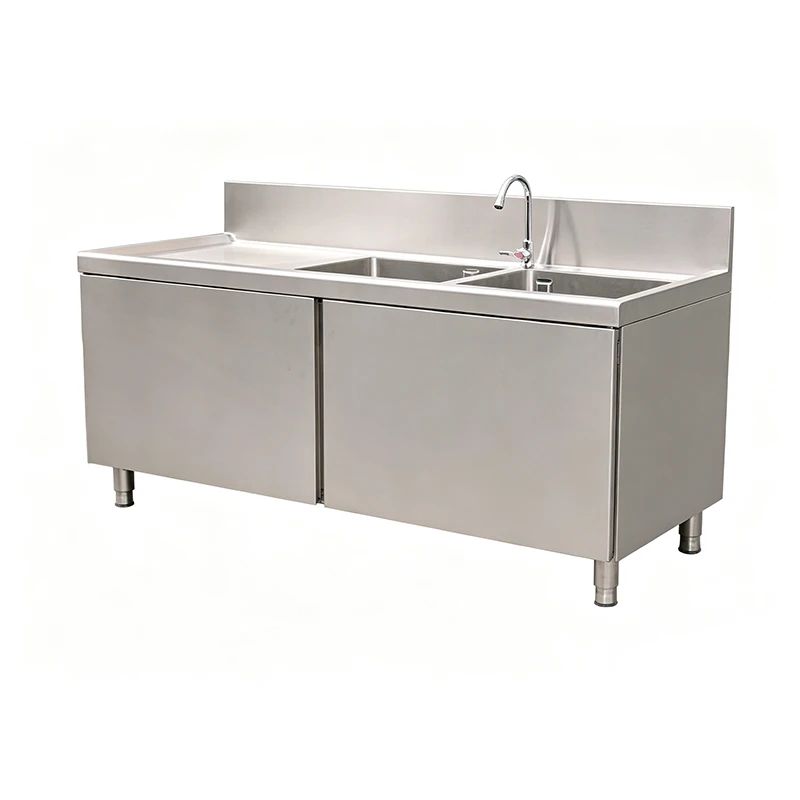
We also offer a range of other kitchen equipment that you might find useful. For instance, our 2 Compartment Sink with Drainboard is perfect for washing dishes and prepping food. And our Commercial Dishwasher Tables are sturdy and functional, making your kitchen work more efficient.
If you're interested in our Insulated Food Delivery Carts or any of our other products, we're here to talk. We can discuss your specific needs, whether it's the size of the cart, the features you want, or the budget you're working with. Don't hesitate to reach out to us and start a procurement discussion. We're eager to help you take your food delivery service to the next level.
References
- Principles of Heat Transfer, Heat Transfer Book
- Practical Guide to Kitchen Equipment, Kitchen Equipment Manual